




Refrigerator Control Board Problems: What to Check Before You Call Anyone
Refrigerator control board problems are easy to mistake for something mechanical, a bad compressor, a dying start relay, a refrigerant leak. Our refrigerator not cooling guide covers those mechanical causes in depth. This one’s about the electronic side, and how to tell the difference before you replace the wrong part.
The Fridge Runs, But Cooling Is Inconsistent
The compressor kicks on, the fans spin, everything sounds normal, but the temperature drifts or never quite settles. Nine times out of ten, that’s the board misreading temperature sensor data, not the compressor actually struggling. Check the door seal and clearance around the fridge first, our fridge placement tips guide covers both, since those mechanical causes are cheaper to rule out before assuming it’s the board.
Check for an Error Code First
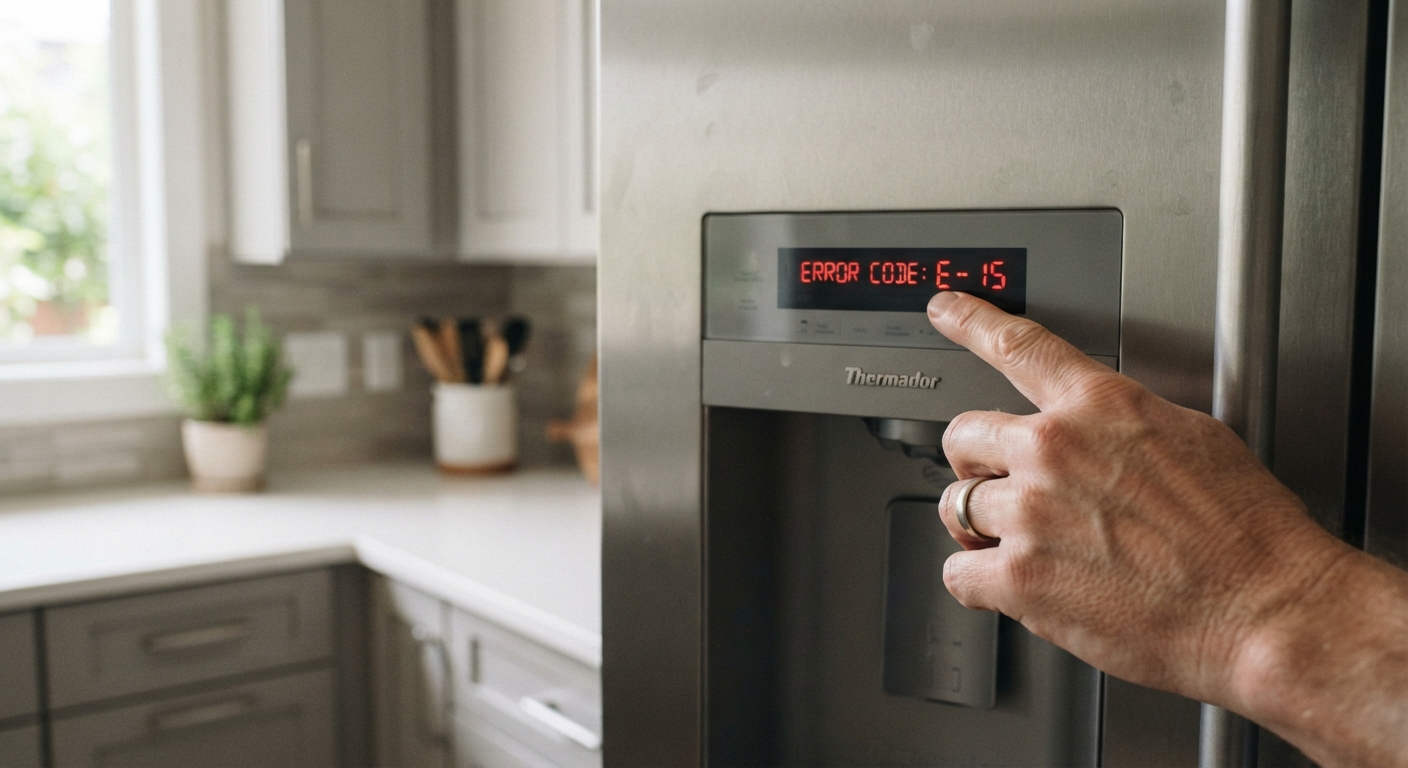
Before you go any further, look for an error code on the display. Newer fridges will flash one instead of just acting up silently, and it’s the fastest way to narrow down whether you’re actually looking at a board issue or something else the code names directly. What the code means depends entirely on the brand, so check your manual or look up the exact code for your model rather than guessing.
Clicking or Buzzing From the Back Panel
A board struggling to manage the compressor and fans often makes noise doing it, clicking, buzzing, a repetitive cycling sound that wasn’t there before. That’s a different sound than the compressor’s own normal hum, and it usually means the board’s connections or relays are wearing out.
Refrigerator Control Board Problems Don’t Always Hit Cooling First
The board also runs the ice maker, the water dispenser, and the interior lights, and any of those can fail on their own while the fridge itself stays cold. If the ice maker stopped and nothing else obviously changed, that’s worth checking before assuming a separate ice maker issue.
Random Restarts or a Compressor That Won’t Cycle Normally
A healthy compressor cycles on and off in a predictable rhythm. A board sending erratic signals can cause the compressor to run constantly without cycling, or shut the whole fridge down and restart it unprompted. Either pattern points at the board’s ability to manage the compressor, not the compressor itself.
Power Surges Cause Real, Sudden Damage
A lightning strike, a grid fluctuation, or even a wiring issue elsewhere in the house can send a voltage spike straight into the board. Unlike the gradual symptoms above, this kind of failure happens all at once, working fine one minute, completely unresponsive the next. A surge protector on the fridge’s outlet is a real, inexpensive way to prevent this specific cause.
Rule Out the Cheap Stuff First
Unplug the fridge for five minutes before assuming it’s the board. This isn’t just a generic reset, it actually clears a hung firmware state on the board itself, the same way restarting a frozen computer works. It costs nothing and fixes more of these calls than people expect.
Check the condenser coils too, dirty coils strain the whole system and can mimic board-related symptoms. And confirm the fridge is actually getting proper voltage, a weak or inconsistent power supply can cause behavior that looks exactly like a failing board.
What a Visual Check Can Tell You
Unplug the fridge and pull the back access panel. Burn marks, a scorched smell, or visible corrosion around the components confirm the board without needing a multimeter. A clean-looking board doesn’t rule it out, it just means the failure’s happening at the component level, small enough that only proper testing catches it.
Why Refrigerator Control Board Problems Get Worse If Ignored
A struggling board doesn’t just affect itself. It sends inconsistent voltage to whatever it’s controlling, and that strain shortens the life of the compressor and fan motors too. A flickering display or an occasional odd noise rarely stays small for long.

