



Effective Washing Machine Drain Troubleshooting: Solutions for Homeowners
We’ve all had a problem one time or another with a broken washing machine, and we all know how painful it is to not have clean clothes in the morning ready to go. If not addressed quickly, it can knock you off your morning routine and derail your entire day. I’ve encountered too many friends and clients to count that have had this issue, and I have come up with a few tips to help solve your washer draining problem. If you’re ready to tackle the issue head-on, check out our washing machine repair services in North York to get professional assistance.
Common Causes of Drainage Problems
To properly address your blocked drain, it’s important to first identify the specific issue you’re facing. Here are some of the most common problems I’ve come across.
Clogged Drain Hose
One of the most common issues is a clog in the drain hose, which prevents the water from draining. I have come across some pretty wild stuff clogging the drain—socks, undershirts, or underwear—but usually, it’s just lint and debris that accumulated over time. I recommend inspecting the entire length of the hose, and if there is a blockage, you should be able to find it with ease.
Pump Filter Blockage
The pump filter, which is meant to catch foreign objects, can become obstructed with all sorts of debris like socks, tissues, bobby pins, dog hair, coins, and gunk, preventing water from passing through and resulting in slow drainage. To fix this, check the bottom left or right of the washing machine where you will find the pump filter.
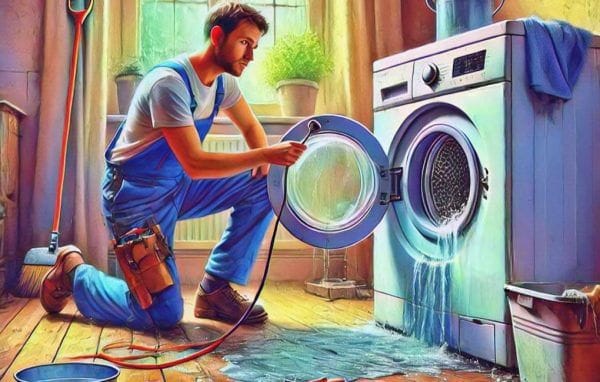
Before you open the drain access, take the hose next to it, remove the cap, and empty as much water as you can into a bucket before you open the hatch. A lot of water might pour out as you remove it, which is fine—have a towel handy to catch all the water. Remove the filter slowly so you have time to absorb all the water. Just remove any debris on the filter and clean it out in the sink with a brush, then put it back in the washing machine. Simple enough.
Faulty Drain Pump
The drain pump is responsible for removing water from the machine, but if it is malfunctioning, it will fail to do that effectively.
First, we recommend getting a pro like us to fix your washer drain pump, but if you want to try yourself, follow these steps:
- Buy a new drain pump that is compatible with your machine.
- Use a screwdriver to remove the front panel and any panels underneath to switch the bad drain pump with the new replacement.
- Take a picture of the wire orientation. Remove the wires. Disconnect all the clamps if there are any. Remove any screws holding the pump to the machine.
- Remove the screws that attach the drain pump to the rest of the housing. Then you can install the new one with the housing removed from the machine.
- Screw the pump back into the housing gently so it doesn’t wear out the plastic sockets.
- Put the housing back into the machine and bolt the housing into the machine.
- Reconnect the wires and wire clamps.
- Put all the covers back on with all three screws.
It’s a big job, and it takes technicians years to master this.
Incorrect Installation
Sometimes the cause of your draining problems is the result of improper installation. Check to see if all the pipes and components are aligned—realigning them should resolve the issue.
Diagnosing the Issue
Listening for Unusual Noises
If you are hearing strange noises during a cycle, this is a sign that you are dealing with specific issues:
- A grinding sound indicates something is likely caught in the pump or impeller.
- Persistent humming without water movement suggests a clogged or malfunctioning drain pump.
- A rattling sound likely means there are loose components within the machine banging against each other.
Checking for Error Codes
If you have a modern machine, this can be a serious help in diagnosing the issue as they display error codes that correspond to specific problems. For example, an “F” series code means you are dealing with a drain-related concern. If you are unsure what the code means, you can either consult your washing machine manual or look it up online.
Preventative Measures
Regular Maintenance Tips
- Check your clothes pockets before adding them to the washing machine for items such as buttons, clips, or even hair.
- Keep your washing machine clean, as any dirt will eventually get pushed down into the filter, causing drainage issues.
- Clean the pump filter every three months, removing any small items such as socks that can obstruct drainage.
For localized assistance, our washing machine repair experts in Thornhill are here to help you with inspections or maintenance to ensure your washer runs smoothly.
Using Proper Detergent
Choosing the right detergent and quantity can have a dramatic impact on your washing machine. Overusing detergent can cause excess suds that lead to drainage problems. Be sure to use high-efficiency (HE) detergents for HE washers, as regular detergents produce more foam and won’t be compatible with newer machines. Check the manufacturer guidelines on detergent amounts or types based on your load size before starting your loads.
Avoiding Overloading
While it may seem like a good idea to stuff extra clothes in to get more out of one load, it usually just isn’t worth the toll it can have on your washing machine. Overloading can strain the washing machine, causing problems like impeding water drainage. Make sure to leave enough room for the clothes to move freely.
For more in-depth advice, check out our pro tips for washing machine installation to keep your appliance running at its best.


