




Gas Stove Won’t Ignite? Here’s How to Tell What’s Wrong
A gas stove won’t ignite for a handful of reasons, and what you’re hearing when you turn the knob usually tells you which one. Clicking with no flame is a different problem than no clicking at all. One dead burner is a different problem than all four going quiet at once.
Before anything else. If it’s a pilot light stove, check your manual first. Most stovetop pilots are actually fine to relight yourself following the manufacturer’s steps. Just don’t attempt it if you smell gas or you’re not sure what you’re looking at. Turn the gas off and call someone instead.
Everything below is for electric ignition systems, which is what most stoves built in the last couple decades have.
Clicking, But No Flame
This is the one we get called out for most. Nine times out of ten it’s a clogged burner port or a wet igniter, not anything actually broken.
A boiled-over pot is the classic cause. Sugar or sauce runs into the little holes around the burner head and hardens there. Gas can’t push through clean enough to catch.
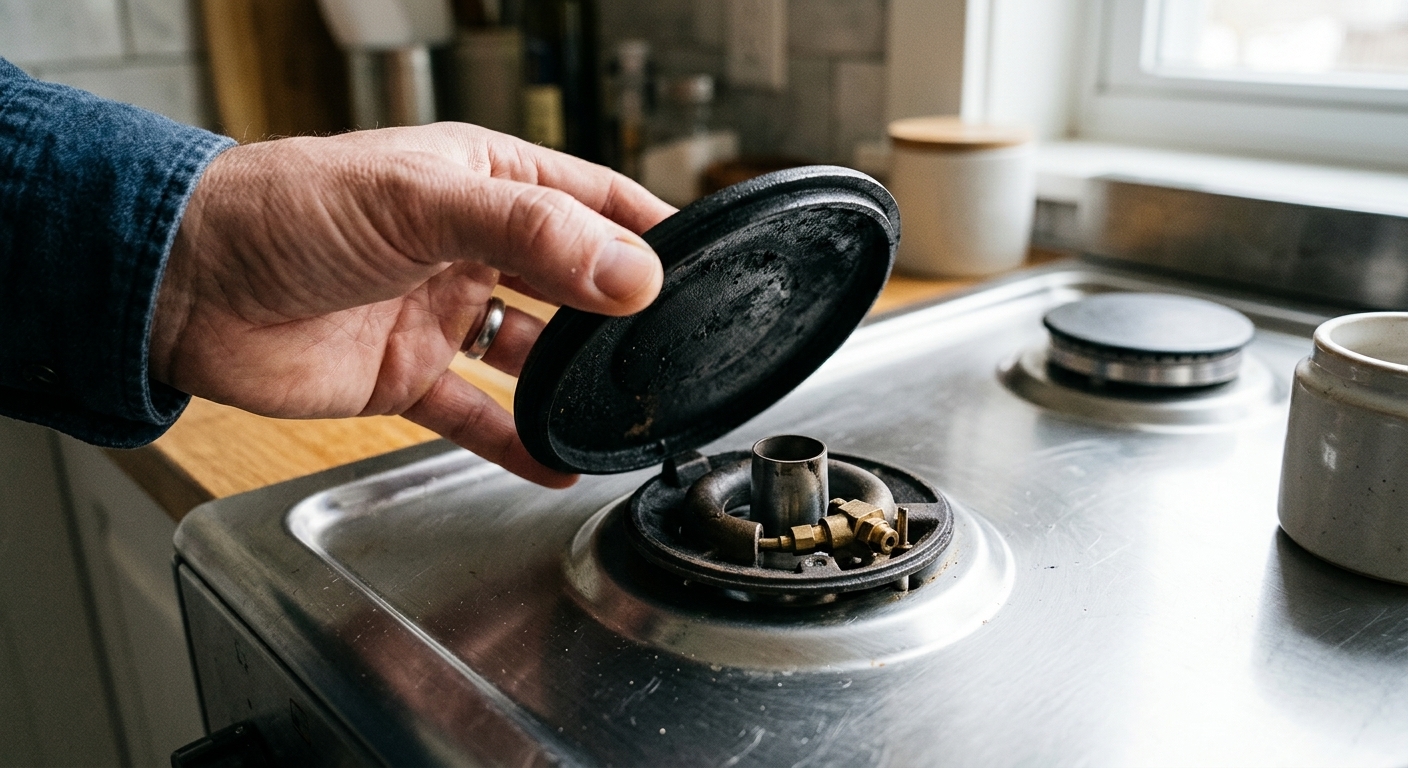
Pull the grate and burner cap off. Clean the holes with a toothbrush or a straightened paperclip. Never a toothpick. It snaps off inside the hole and makes things worse.
Ports clear and it’s still just clicking? Check for moisture next. Recent cleaning, a spill, even a run of humid weather can leave enough water around the igniter to short the spark. Dry it out with a hairdryer for a few minutes before you assume anything’s actually failed.
Gas Stove Won’t Ignite and Isn’t Even Clicking?
If you turn the knob and get nothing, not even the clicking sound, that’s usually electrical, not gas.
Check for a loose or disconnected wire at the burner base. Cleaning and vibration from everyday use knock these loose more often than people expect. Cut power at the breaker before you go looking. Wiring’s fine and you’re still getting nothing? The igniter’s probably shot.
Gas Stove Won’t Ignite on Any Burner?
One dead burner points to that burner. All of them going out at once points somewhere else. Usually the spark module.
On some stoves, particularly older models and a few current lines like Samsung and GE, pressing every burner knob at the same time fires every igniter at once. If none of them spark during that test, the module’s your answer.
On stoves where each burner ignites independently, this test won’t tell you anything. If that’s your setup, a dead spark module usually still shows up as multiple burners failing around the same time. Just not necessarily instantly.
Worth checking your gas supply too before assuming it’s electrical. If other gas appliances in the house have also gone quiet, that’s not your stove. That’s a supply issue. Call your utility company before you touch anything else.
The Burner Cap Might Just Be Sitting Wrong
A cap that isn’t seated flat and level will throw off the whole ignition, even with a working igniter underneath. It’s an easy thing to overlook, especially the front burners. Those get moved and cleaned more than the back ones and end up sitting crooked more often as a result.
Lift it off, reseat it flat, and try again before you start replacing parts.
Gas Stove Won’t Ignite Even After Cleaning? Here’s What’s Next
A spark module or ignition wire harness replacement isn’t a five-minute fix. It usually means accessing the control panel or wiring behind the stove. On a lot of newer units, that’s not a simple swap.
If the stove’s older and the repair’s going to run close to what a new one costs, it’s worth being honest about whether that’s money well spent. We covered this in more detail in our post on all things gas stove, worth a read if you’re weighing repair against replacement.
Safety First, Always
A persistent gas smell means something different from an ignition problem. It’s not something to troubleshoot. Leave the area, don’t flip any switches on your way out, and call your gas utility or a technician from outside the house. Enbridge Gas has a 24-hour emergency line for exactly this situation. That’s not a DIY situation under any circumstances.
Keeping This From Happening Again
Wipe up spills before they harden into the burner ports. That alone stops most of what’s above from happening in the first place. Clean burner caps and grates monthly. And if you’ve just had the stove professionally cleaned or moved, give the igniters time to dry out fully before assuming something’s broken.
Still stuck after all that? If a gas stove won’t ignite no matter what you try, that’s the point to call in someone instead of guessing further. Our team handles this kind of diagnosis regularly in North York and Thornhill. See our oven repair service page for what to expect from a service call.


